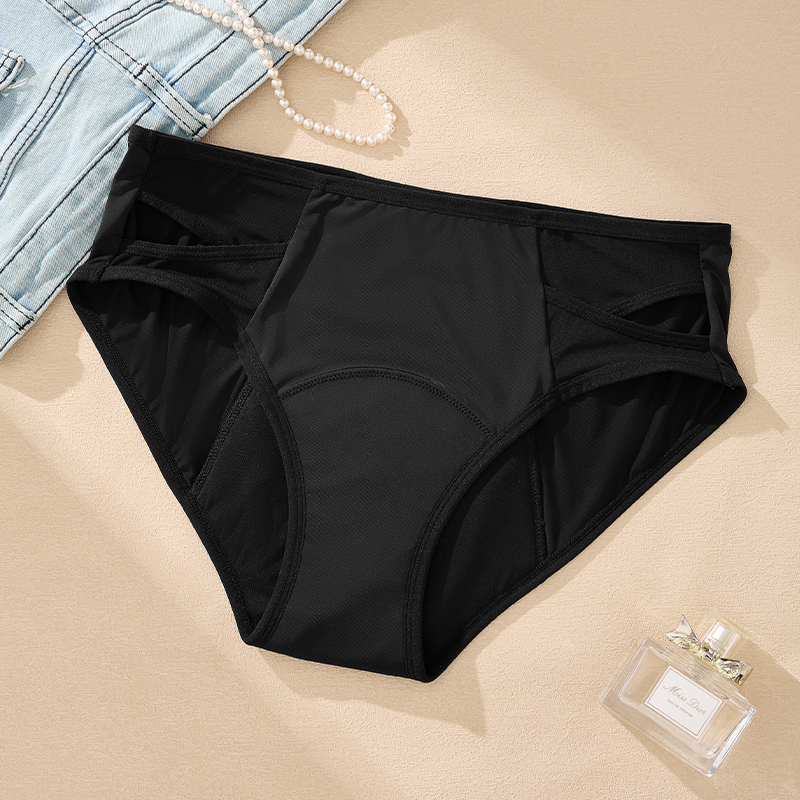
A reliable period underwear manufacturer should control fabric sourcing, absorbent layer development, waterproof construction, sewing accuracy, testing, and quality systems. Manufacturers producing commercial-grade period underwear typically manage 3–5 functional fabric layers, complete absorbency testing, and repeated wash evaluations. Brands should review production records, laboratory data, material specifications, and monthly capacity before selecting a supplier.
A qualified period underwear manufacturer needs more than standard underwear production experience. Period underwear combines intimate apparel construction with technical textile requirements, and small differences in fabric weight, seam placement, or absorbent panel size can change product performance.
A typical period underwear structure contains 4 main functional sections: skin-contact fabric, moisture distribution layer, absorbent layer, and leak-resistant barrier. Some premium designs use 5 layers to improve fluid management while maintaining flexibility.
Manufacturers should have product engineers who can adjust these layers according to different usage scenarios. For example, a daytime product may prioritize thinner construction and faster drying, while overnight products often extend absorbent coverage toward the rear area.
A factory that develops 10–20 prototype variations before bulk production can identify construction issues earlier than a supplier that moves directly from concept to manufacturing.
Material selection affects almost every production result. Cotton-spandex blends, modal fabrics, recycled polyester, nylon blends, and technical absorbent textiles are commonly used in period underwear collections.
Fabric testing should include weight, stretch recovery, shrinkage, colorfastness, and moisture management. Many brands request fabrics tested after 3–5 washing cycles because reusable underwear is expected to maintain performance over long periods.
| Material factor | Common production requirement |
|---|---|
| Fabric weight | Usually controlled within a narrow GSM range |
| Stretch recovery | Tested after repeated stretching cycles |
| Absorbency | Evaluated by liquid capacity and speed |
| Barrier layer | Checked for leakage resistance |
| Wash durability | Reviewed after multiple laundering cycles |
A manufacturer with stable material sourcing can maintain consistent production across different orders. Material changes without technical review may affect absorbency, thickness, and garment comfort.
Absorbent gusset construction requires specialized production knowledge because the insert area must balance capacity and flexibility. The absorbent section is often the most technically controlled part of the garment.
Factories usually manage panel dimensions, layer alignment, stitch density, and edge finishing through detailed production instructions. A difference of only a few millimeters in panel placement can influence coverage and wearer experience.
Manufacturers should also compare absorbency before and after washing. A useful evaluation may include 20–50 garment samples from different production batches to confirm that results remain consistent.
Functional underwear should be evaluated as a complete garment system, not only by checking the absorbent fabric alone.
Waterproof barrier technology requires careful handling during production. Many products use laminated fabrics containing breathable membranes or coated layers designed to prevent leakage while allowing airflow.
Lamination quality depends on adhesive selection, temperature control, pressure settings, and bonding strength. Incorrect processing can cause separation after repeated laundering.
A factory should maintain records for lamination parameters and conduct durability checks. Some brands require testing after 30–50 wash cycles to confirm long-term performance.
The cutting process also affects product consistency. Stretch fabrics can move during spreading, and multilayer absorbent materials require accurate positioning before sewing.
Modern factories often use computerized pattern systems and automatic cutting equipment to reduce measurement variation. Size grading must also include absorbent panel adjustments rather than simply enlarging the outer garment pattern.
For example, a medium-size absorbent panel may not provide suitable coverage when transferred directly to extended-size products. Each size range should receive separate technical review.
Sewing capability determines whether the finished garment maintains comfort and function. Period underwear usually requires overlock, flatlock, coverstitch, elastic attaching, and specialized seam control.
Operators must control thread tension, stitch density, and seam placement because excessive stitching can increase thickness or affect barrier performance.
Production lines should include trained workers who understand stretch fabrics and multilayer constructions. A factory producing basic underwear may not automatically have the skills required for technical absorbent garments.
In 2024, reusable intimate apparel brands increasingly requested lower-profile seams and smoother finishes, requiring manufacturers to improve bonding and sewing methods.
Quality control should cover every production stage instead of only checking finished products. Incoming inspection verifies fabrics and accessories, while in-line checks identify problems during sewing and assembly.
Final inspections normally review measurements, appearance, stitching quality, labeling, packaging, and functional details. Inspection systems often use sampling methods based on order quantity and customer requirements.
A manufacturer should define acceptable quality limits before production begins. These standards help production teams classify issues consistently across thousands of pieces.
Laboratory testing supports quality control with measurable results. Common tests include absorption capacity, liquid spreading, leakage resistance, seam strength, fabric durability, and chemical compliance.
Independent testing laboratories are often used for market-specific requirements. Products sold in North America and Europe may require documentation related to restricted substances, textile safety, and material certification.
Chemical management is becoming more important as consumers request safer intimate apparel products. Manufacturers should maintain supplier documents, fabric test reports, and production records.
A traceable material system allows a factory to identify which fabric batch, membrane supplier, or production lot was used for a specific order.
Traceability is especially useful when brands repeat orders across different seasons. A factory should be able to match current production materials with previously approved specifications.
Production capacity should also be evaluated based on period underwear experience rather than general garment output. A factory may produce thousands of simple underwear pieces daily but require additional time for multilayer functional products.
Brands should review:
-
Monthly period underwear capacity
-
Number of production lines
-
Sampling speed
-
Material lead times
-
Quality inspection process
-
Packaging capability
A supplier producing 50,000 simple garments per month may have a lower effective capacity for complex absorbent underwear because each piece requires additional operations.
OEM and ODM support can improve product development efficiency. OEM production usually follows customer specifications, while ODM services may include fabric selection, pattern development, construction improvement, and packaging assistance.
Experienced manufacturers often maintain material libraries and previous development references. These resources allow brands to compare different absorbency levels, fabric options, and construction methods.
A strong development process may include several sample rounds. Many brands complete 2–5 revision stages before approving a final production sample.
Packaging and labeling management should also be included in supplier evaluation. Retail-ready products require accurate size labels, care instructions, barcodes, packaging materials, and carton information.
Packaging mistakes can create inventory issues even when garment quality meets requirements. Manufacturers should use documented packing procedures and final verification checks.
Sustainability requirements also influence manufacturing decisions. Brands may request recycled fibers, certified materials, or reduced packaging solutions.
Factories handling these requests should understand certification documentation and supplier verification. Materials with similar appearance may have different sourcing records and production standards.
Production planning becomes more complex when multiple materials come from different suppliers. Fabric, elastic, waterproof layers, labels, and packaging often have different delivery schedules.
Manufacturers should monitor material arrival dates and production milestones. Pre-production meetings involving technical, quality, and production teams help confirm specifications before large-scale manufacturing begins.
A supplier evaluation should include factory visits or detailed production reviews whenever possible. Brands should examine actual manufacturing areas, testing equipment, quality records, and current production examples.
A factory assessment based on documents, samples, and production evidence provides a clearer picture than reviewing price quotations alone.
Communication quality also affects long-term cooperation. Period underwear development often requires adjustments because changes in one material can influence thickness, cost, sewing difficulty, and performance.
Technical teams should explain material choices, sample changes, and production limitations clearly. Written specifications reduce misunderstandings during repeat orders.
Manufacturers that combine textile knowledge, specialized equipment, testing systems, and organized production management are better prepared to support growing period underwear brands. A supplier should be evaluated by its ability to reproduce consistent results across different sizes, colors, and production batches rather than only by its first sample appearance.